Hospitality vs. Specialty Retail: A Comparative Analysis of Profitability in the Spanish Market
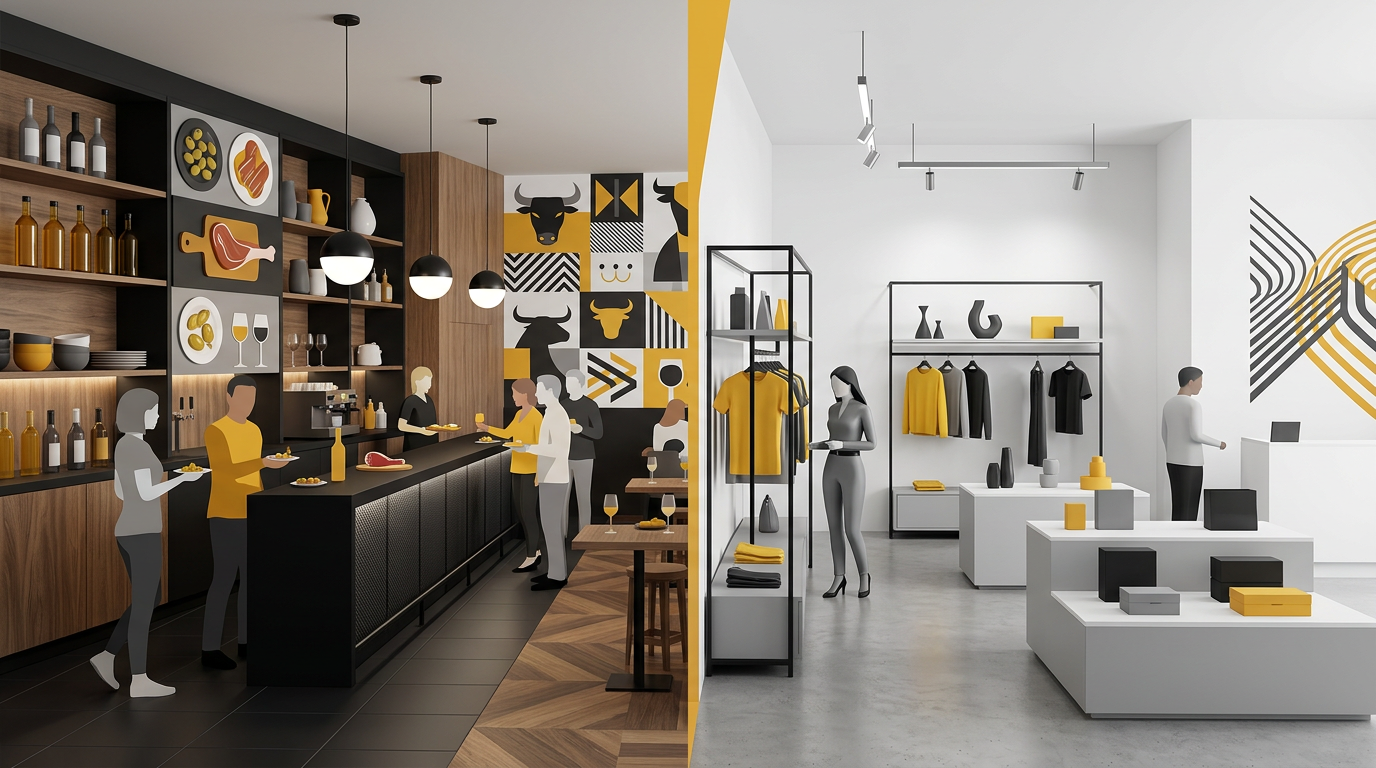
The Silent War for the Bottom Line: Hospitality or Specialty Retail?
If you have 150,000 euros and a dream of being your own boss in Spain, you are likely torn between two paths: opening a neighborhood bistro or a specialized boutique. Most entrepreneurs choose by "feel," but the numbers tell a much colder story. Your bank account doesn't care about your passion for coffee or artisan leather; it cares about your break-even point and your cash cycle.
In the Spanish market, hospitality (restaurants/bars) and specialty retail (clothing, gourmet shops, electronics) operate on completely different financial engines. While a bar generates cash daily, its fixed costs can swallow you whole. A retail shop might have better margins, but your money is often "trapped" in shelves full of unsold inventory.
The Reality of Fixed Costs: Rent and Staff
In hospitality, your biggest enemy is the clock. Every hour your tables are empty, you are losing money on electricity, kitchen staff, and high insurance premiums required by local regulations. In a standard Spanish restaurant, labor costs usually hover around 35% to 40% of total sales because you need people to prep, serve, and clean.
Specialty retail is different. You can often run a small boutique with just one or two people. However, your rent-to-sales ratio must be much tighter. In retail, if your rent exceeds 15% of your expected turnover, you are heading for trouble. In hospitality, because margins on drinks are so high (often 300% or more), you can sometimes justify a slightly more expensive location if it guarantees heavy foot traffic.
Nota: Gráfico conceptual ilustrativo para representar la tendencia estratégica.
Inventory: The Cash Trap
Let's look at the "Napkin Math." If you run a gourmet cheese shop, you buy 10,000 euros of stock. That money is gone. It sits on the shelf. You only get it back when someone walks in and buys a wedge. If it doesn't sell, it expires or stays there for months. This is "Dead Capital."
In a restaurant, your inventory is fresh. You buy morning produce and sell it by nightfall. Your cash cycle is incredibly fast—often less than 24 hours. This means hospitality businesses can technically operate with very little working capital, whereas a retail shop needs a "war chest" just to keep the shelves looking full.
The Break-Even Point: When Do You Actually Make Money?
Most small businesses in Spain fail because they underestimate the "Death Valley" period—the months it takes to reach the break-even point. In hospitality, because of the higher initial investment in smoke extraction, industrial kitchens, and licenses, the "hole" is deeper. You might need to sell 400 meals a month just to pay the lights.
In specialty retail, the entry barrier is lower. You need paint, some shelves, and a POS system. But the growth is slower. You don't have "regulars" who come in three times a day for a coffee. Building a loyal customer base for a boutique takes significantly longer than for a tapas bar.
Nota: Gráfico conceptual ilustrativo para representar la tendencia estratégica.
Which One Should You Choose?
If you prefer a high-octane environment where you handle thousands of small transactions and have immediate cash flow, hospitality is your game. You are selling an experience and a service. Expect long hours and high staff turnover.
If you prefer specialized knowledge, higher individual ticket prices, and a more predictable schedule, specialty retail is the winner. But remember: your success will depend entirely on your ability to manage stock. Every Euro sitting on a shelf is a Euro that isn't in your pocket.
Next Steps for Your Business
Don't sign a lease based on a "hunch." At Retail Lemon, we help small business owners move from "hoping to make it" to "knowing the numbers." Our 360º Method analyzes your specific location and local competition to ensure your business model actually holds water.
Whether you are opening a bakery or a high-end bike shop, you need a plan that accounts for Spanish labor laws, local taxes, and realistic foot traffic. Contact us today to see how we can turn your business idea into a profitable reality.