The Geometry of the Checkout: How a 40m2 Store Doubled its Profit by Rearranging the Aisles
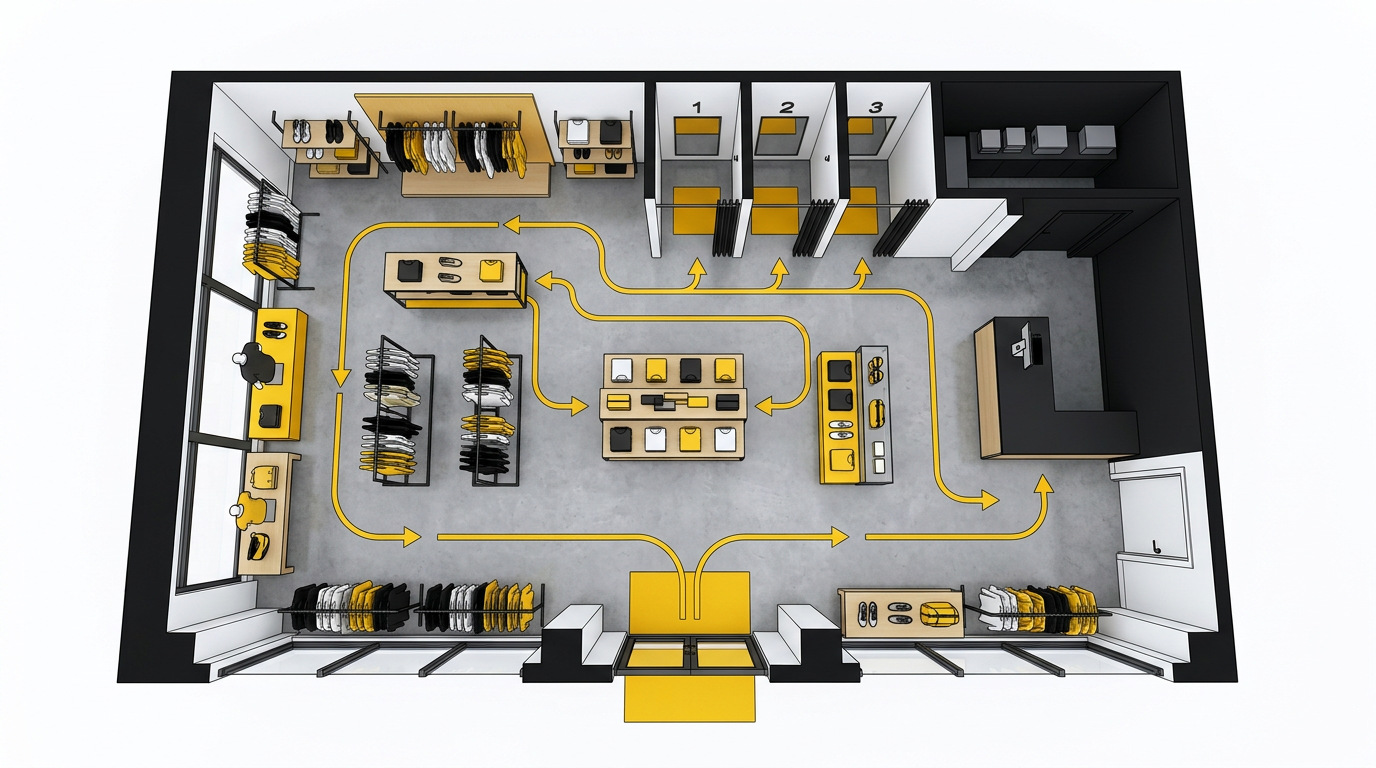
The Geometry of the Checkout: How a 40m2 Store Doubled its Profit by Rearranging the Aisles
Most independent retailers treat their shop floor like a Tetris game. They try to cram as many shelves as possible into a small space, thinking that more products mean more sales. They are wrong. If your customer enters and feels claustrophobic, they will leave in less than 30 seconds. In the retail world, we call this the "bounce rate," and it kills small businesses.
I recently worked with a neighborhood gift shop nearby. The owner was frustrated because the street was busy, but his till was empty. He had 40 square meters of prime real estate, yet he was barely breaking even. We didn't change his prices. We didn't spend a Euro on advertising. We simply moved the furniture. Here is how the geometry of a small space can bridge the gap between "just looking" and a sale.
The Decompression Zone: Stop Scaring Customers Away
The first 1.5 to 2 meters inside your door is the "Decompression Zone." This is where the customer transitions from the noisy street to your store's atmosphere. If you place a rack or a counter right at the entrance, you create a physical and psychological barrier. People "bounce" off it and walk back out.
In this 40m2 shop, we cleared the entrance completely. We removed a spin-rack that was blocking the view. By giving the customer space to breathe and scan the room, their "dwell time" (the minutes they stay inside) increased instantly. If a customer stays 2 minutes longer, the probability of them buying increases by 40%.
This article is exclusive to Club Pro members.
Join now and keep reading without limits.