5 Critical Failures in Pharmaceutical Distribution Center Audits and How to Fix Them
The Logistics Bottleneck That Kills Pharmacy Margins
Most pharmaceutical distribution centers operate under the dangerous illusion that high storage capacity equals efficiency. It does not. During an audit, looking at how many pallets fit in the racks is a waste of time if you are not calculating the velocity at which those pallets leave the building. In a sector where expiration dates and strict temperature controls dictate the pace, every hour an item sits idle, it loses profitability.
Audit failures usually stem from focusing on the physical space rather than the financial data flowing through that space. If your audit focuses on "compliance" alone without looking at "performance," you are missing half the picture. Here are the five critical failures that leak cash in your warehouse operations.
1. Storage Capacity vs. Operational Flow
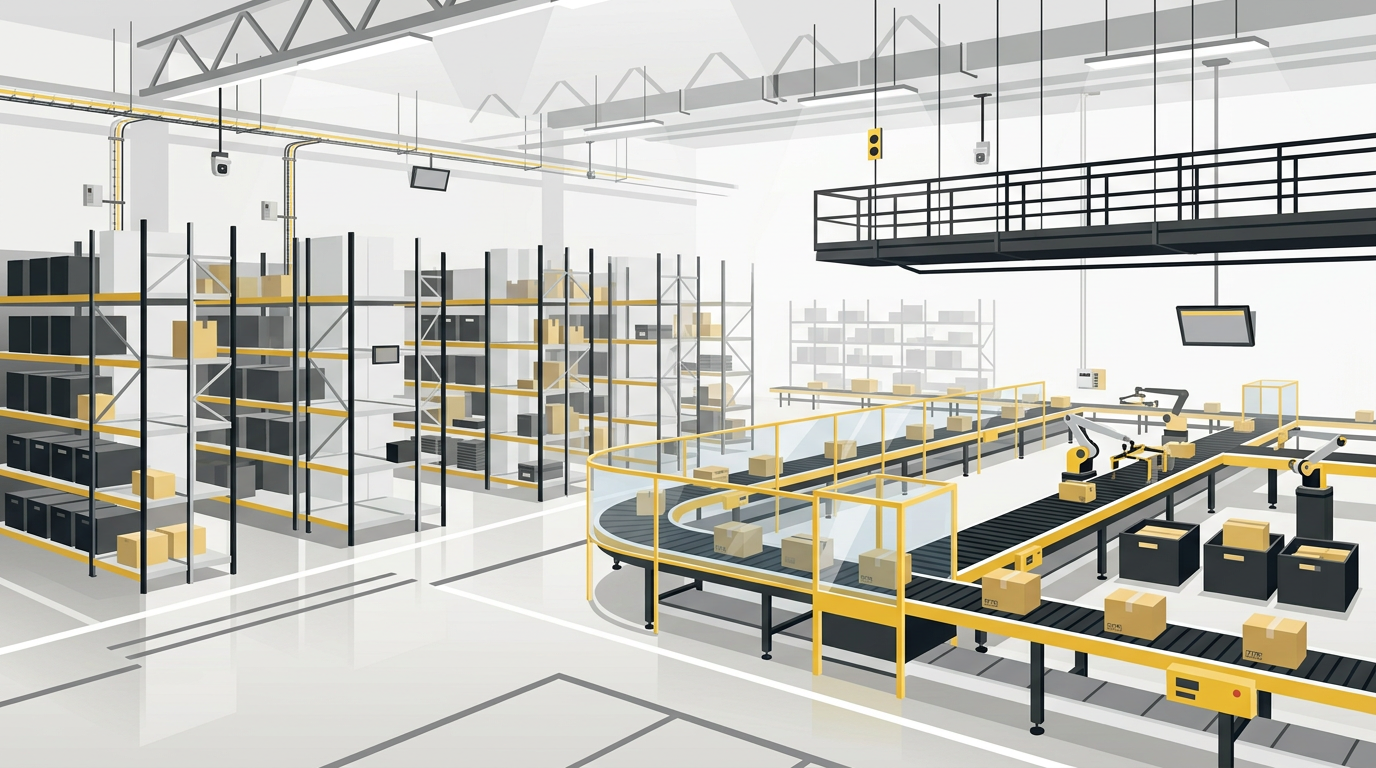
The biggest mistake is prioritizing 95% occupancy over flow. When a distribution center is too full, productivity plummets. Warehouses operate best at 80% to 85% capacity. Once you cross the 90% threshold, your staff spends more time "shuffling" stock to reach the products they actually need than they do picking orders. This is the "honeycomb effect," and it is an invisible margin killer.
Nota: Gráfico conceptual ilustrativo para representar la tendencia estratégica.
2. The Cold Chain Data Divorce
Is your temperature monitoring system talking to your Inventory Management System? Usually, the answer is no. Auditors often see temperature logs kept in a separate "silo." This is a disaster waiting to happen. High-performance pharmaceutical centers must integrate real-time thermal alerts with the specific batch number in the system. If a fridge fails and you can't instantly identify which $50,000 shipment is at risk, your audit process is fundamentally broken.
3. Ignoring Labor Cost Per Unit (LCPU)
Stop looking at total monthly payroll. It tells you nothing. You need to calculate the Labor Cost Per Unit. If your warehouse staff costs $100,000 a month and you move 500,000 units, your LCPU is $0.20. During peak seasons, many managers hire more people but see the LCPU rise to $0.25 because of congestion and poor training. An audit must spotlight the LCPU at different pick-densities to find where you are throwing money away on inefficient labor.
Nota: Gráfico conceptual ilustrativo para representar la tendencia estratégica.
4. Real-Time Stock Desynchronization
Counting stock once a month is an ancient practice that belongs in a museum. High-performance centers use cycle counting. If your WMS (Warehouse Management System) shows 500 units of insulin but the physical shelf only has 480, you have a synchronization failure. This leads to "backorders" and lost trust from pharmacies. Your audit should measure the "inventory accuracy gap" daily, not annually. A gap higher than 0.5% in pharma is unacceptable.
5. Passive Replenishment Algorithms
Most distribution centers use static replenishment: "When stock hits 10, buy 50." In the current market, this is suicide. Advanced audits check if your system uses predictive algorithms that account for seasonality or local health trends. If you are stocking the same amount of allergy medication in December as you do in April, your capital is tied up in dead stock. High-performance centers audit their algorithms every quarter to ensure the "safety stock" aligns with actual demand velocity.
Actionable Takeaway
Go to your warehouse today and calculate your Labor Cost Per Unit for the last week. If it is higher than your average for the year, you don't have a "staff problem," you have a "flow problem." Fix the layout before you hire more people.