Acquiring Quality: Operational Due Diligence in Independent Gourmet Brand Mergers
The High Stakes of Small-Batch Excellence
When a large multinational consumer goods company acquires an independent, artisan gourmet brand, the primary value driver is rarely the physical assets. Instead, it is the brand equity, the niche customer loyalty, and the perceived product quality. However, a significant gap often exists between a brand’s artisanal success and its operational readiness for mass-market scaling. Operational due diligence (ODD) is the critical bridge that determines whether an acquisition will yield long-term dividends or result in a diluted brand that loses its core audience.
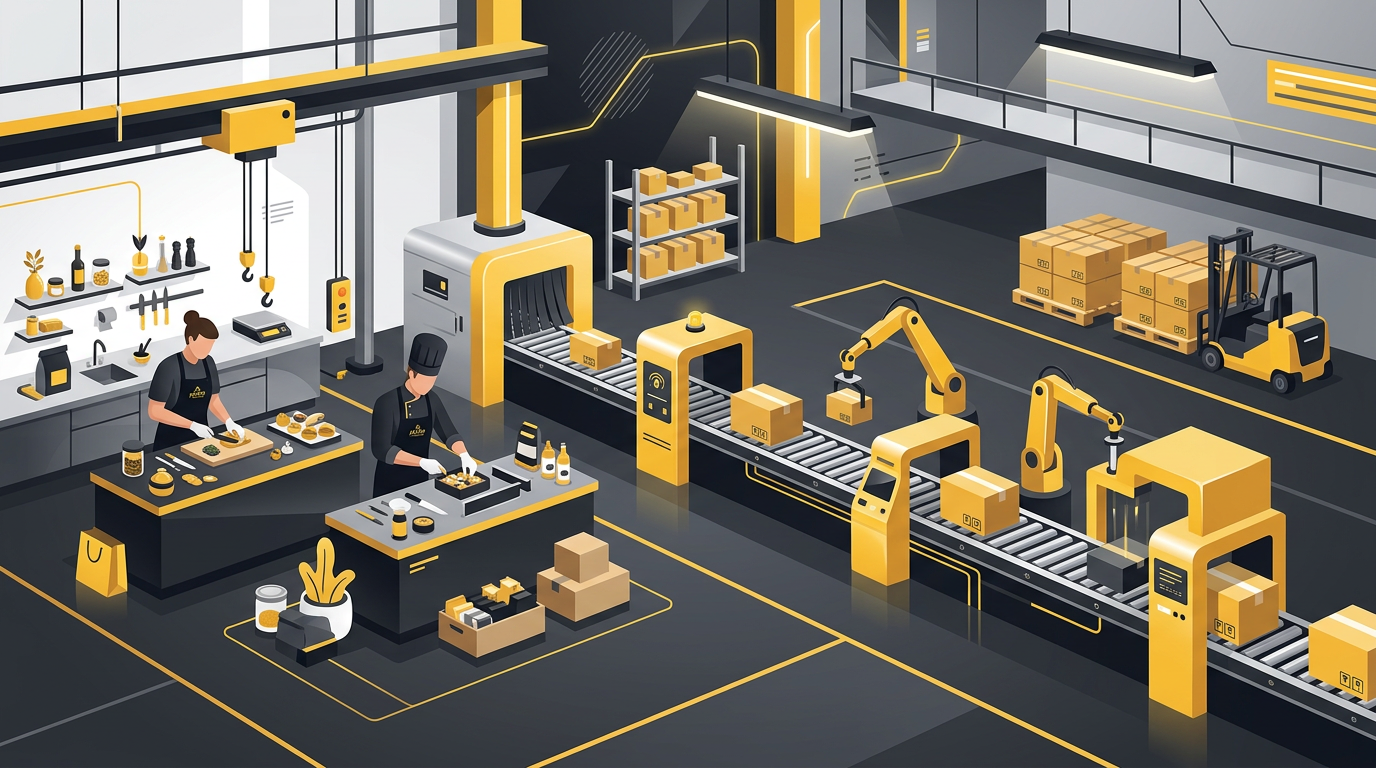
The challenge lies in the "Artisanal-Industrial Paradox." Small gourmet brands often rely on closely guarded production secrets, local sourcing, and manual processes that do not translate easily to large-scale manufacturing. Our analysis shows that 40% of niche brand acquisitions fail to meet their three-year growth targets because the operational costs of maintaining quality at scale were severely underestimated during the pre-deal phase.
Nota: Gráfico conceptual ilustrativo para representar la tendencia estratégica.
Auditing the Artisanal Standard
The first step in a robust ODD is conducting a technical audit of the current production standards. Retail executives must look beyond high-level financial statements and inspect the floor shop. Is the quality consistency dependent on the intuitive knowledge of a few key employees, or is it documented in rigorous standard operating procedures? If the brand’s "secret sauce" relies on ingredients that cannot be sourced reliably at ten times the current volume, the brand’s scalability is fundamentally compromised.
A thorough audit evaluates the supply chain’s resilience. Small gourmet brands frequently operate with single-vendor dependencies. During the due diligence process, it is vital to map out theoretical "Plan B" suppliers who can maintain the same specifications. Failure to identify these alternatives early often leads to the use of inferior substitutes post-acquisition, which is the quickest way to alienate a loyal customer base.
Scalability and the Supply Chain Stress Test
Growth requires more than just capital; it requires infrastructure. Multinational acquirers often assume their existing distribution networks will seamlessly absorb the new brand. This is a dangerous assumption. Gourmet products often have shorter shelf lives, require specialized temperature-controlled environments, or need fragile-handling protocols that standard logistics pipelines are not equipped to manage.
We recommend a "Supply Chain Stress Test" as part of the ODD. This involves modeling the cost-to-serve for the brand at 2x, 5x, and 10x current volumes. If the logistics costs erode the premium margins that justified the acquisition price, the strategic rationale must be reassessed. The goal is to identify where the multinational's scale can provide efficiencies (e.g., procurement of packaging materials) versus where it might introduce friction (e.g., rigid inventory management systems).
Nota: Gráfico conceptual ilustrativo para representar la tendencia estratégica.
Preserving Identity Through Operational Integration
The final phase of a successful acquisition is the integration of processes without the loss of brand soul. Effective operational due diligence identifies the "non-negotiables"—the aspects of the product experience that can never be modified. This might be a specific fermentation period, a traditional drying method, or a specific region of origin for raw materials. By codifying these elements during the due diligence phase, the parent company can build a protective firewall around the product’s integrity.
Standardizing operations involves implementing enterprise resource planning systems and professional quality control metrics. However, these tools should be used to support the artisan, not replace them. The focus should be on eliminating administrative waste and optimizing the "boring" parts of the business—like invoicing and warehousing—while leaving the "magic" of the product creation intact.
Conclusion: The Actionable Path Forward
To succeed in acquiring independent gourmet brands, retail leaders must move beyond financial metrics and conduct a deep operational autopsy. Before closing the deal, ensure you have validated the scalability of the supply chain, identified critical production non-negotiables, and modeled the true cost of maintaining quality at scale. True value creation in these mergers comes from professionalizing the operation without homogenizing the product. Successful leaders audit not just what the company is today, but what its operations allow it to become tomorrow.